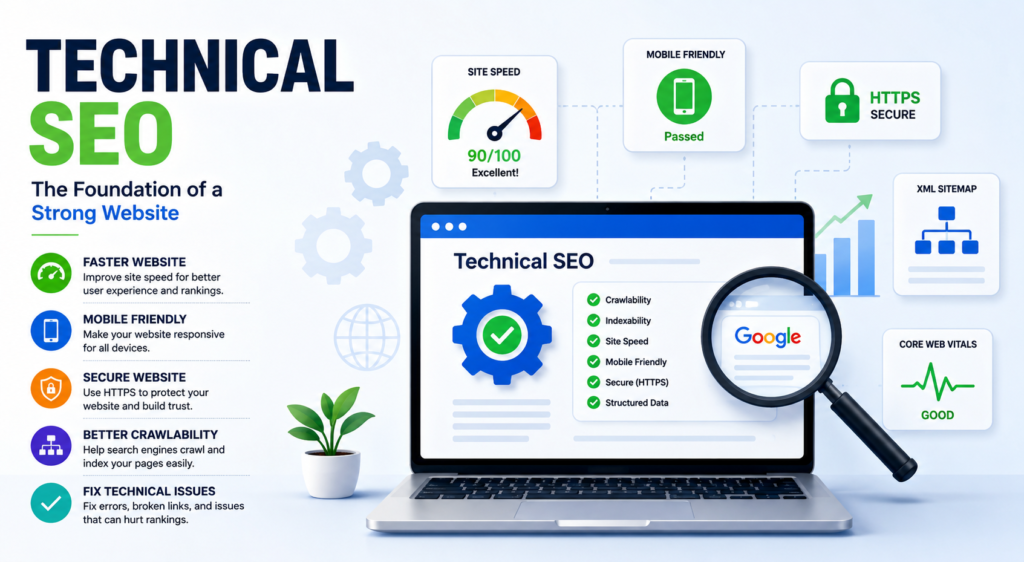
Technical SEO helps search engines find, crawl, and understand your website more easily. It also improves website speed, mobile friendliness, security, and overall performance. A well-optimized website provides a better user experience and has a greater chance of ranking higher in Google search results.
Free Website Audit Tools for Better Performance
Free website audit tools help identify technical problems that affect performance. For example, they can detect slow page speed, broken links, crawl errors, indexing issues, and mobile usability problems. Therefore, checking your website regularly helps improve performance and search visibility.
Which Website Issues Can Reduce Search Visibility?
Several technical problems can affect your search rankings. Common issues include slow loading speed, duplicate content, broken links, missing XML sitemaps, crawl errors, and pages that are not mobile-friendly. Fixing these issues allows search engines to crawl and index your website more effectively.
Free Checklist for Better Website Optimization
A simple optimization checklist helps keep your website healthy. First, improve page speed and mobile friendliness. Next, fix broken links and crawl errors. Also, create an XML sitemap, use HTTPS security, and check indexing regularly. As a result, your website becomes easier for search engines to understand.
Which Website Tools Help Find Performance Problems?
Website analysis tools help detect problems before they affect your rankings. They can identify crawl errors, indexing issues, slow loading pages, broken links, and mobile usability problems. In addition, regular monitoring improves user experience and website health.
Best Strategies to Improve Website Health Fast
Improving website health starts with better page speed, HTTPS security, XML sitemaps, and mobile optimization. You should also remove crawl errors, repair broken links, and improve internal linking. These improvements help search engines understand your website and improve search performance.
How Does Website Structure Improve Search Rankings?
A clear website structure makes it easier for search engines to crawl and understand your pages. In addition, good internal linking, clean URLs, XML sitemaps, and organized navigation improve indexing. As a result, your pages have a better chance of ranking higher.
Which Practices Improve Website Crawlability?
Website crawlability improves when search engines can access every important page without errors. Creating an XML sitemap, fixing broken links, improving internal linking, and removing crawl issues all support better indexing. Therefore, maintaining a clean website structure is essential for long-term SEO success.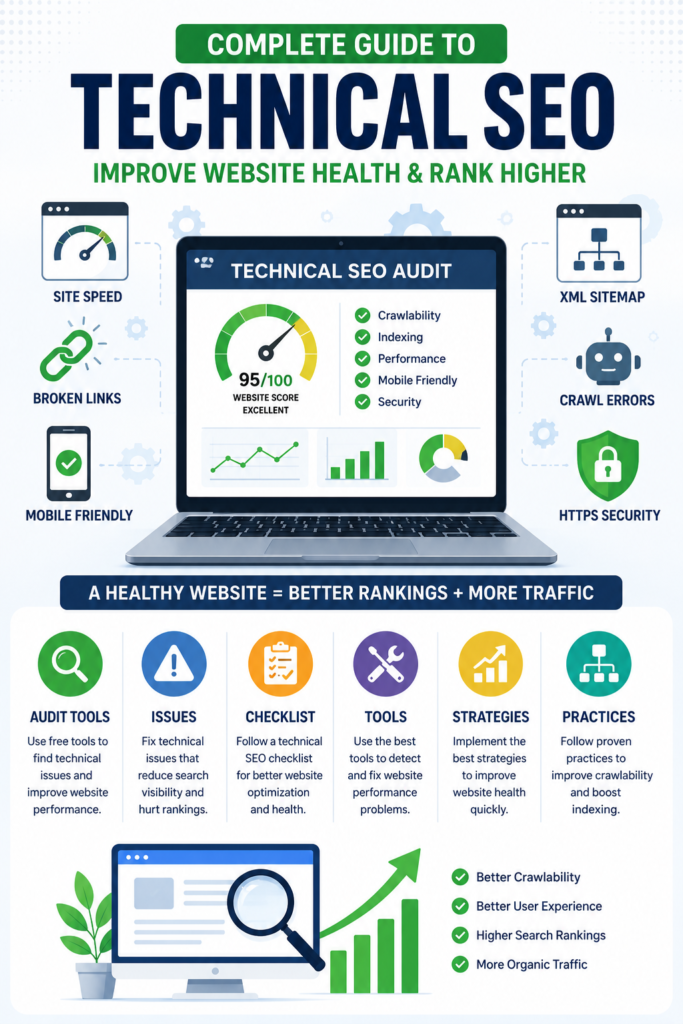
Frequently Asked Questions (FAQs)
1. What Is Technical SEO?
Technical SEO improves your website’s technical structure so search engines can crawl, index, and rank your pages more efficiently.
2. Why Is Website Optimization Important?
Website optimization improves speed, user experience, search visibility, and overall performance. It also makes your website easier for search engines to understand.
3. What Are the Most Important Website Optimization Factors?
The most important factors include fast page speed, mobile friendliness, HTTPS security, XML sitemaps, crawlability, indexing, and fixing broken links.
4. Which Tools Can Help Analyze a Website?
Popular tools include Google Search Console, Google PageSpeed Insights, Screaming Frog SEO Spider, GTmetrix, and Ahrefs Site Audit. These tools help identify and fix technical problems.
5. How Often Should I Perform a Website Audit?
You should perform a website audit at least once a month or after making major changes. Regular audits help detect problems early and maintain strong search performance.
Conclusion
Technical SEO is the foundation of a fast, secure, and search-friendly website. By improving page speed, fixing technical errors, strengthening website structure, and maintaining proper indexing, you make it easier for search engines to understand your content. Moreover, regular website audits and continuous optimization improve user experience, increase organic traffic, and support long-term SEO success.